
You wake up tired after a full night in bed. Your partner says you snore, gasp, or go quiet for a few seconds at a time.
Yes, a dentist can help treat obstructive sleep apnea, the most common form. A dentist fits a custom oral appliance that holds your lower jaw slightly forward. That keeps your airway open while you sleep. A sleep physician diagnoses the condition first. Your dentist then builds and adjusts the device.
At Echo Ridge Dental in Wenatchee, Dr. Michael Potter, DDS, fits custom oral appliances for patients who snore or struggle with a CPAP machine.
Key Takeaways If You Wake Up Tired
- A dentist treats obstructive sleep apnea with a custom oral appliance, not a CPAP machine.
- A sleep physician must diagnose sleep apnea first, usually with a sleep study.
- Oral appliance therapy suits mild to moderate cases, and severe cases when CPAP does not work.
- A custom sleep apnea appliance often costs between $500 and $2,500, and many plans cover part of it.
- Call Echo Ridge Dental at (509) 662-9685 to ask about a sleep appliance evaluation.
Can a Dentist Actually Treat Sleep Apnea?
Yes. Dentists treat obstructive sleep apnea with oral appliance therapy, a custom device you wear at night. The American Academy of Sleep Medicine and the American Academy of Dental Sleep Medicine recommend these appliances for adults who cannot tolerate CPAP or want another option. A sleep physician makes the diagnosis. The dentist fits and adjusts the appliance.
Think of it as teamwork. Your doctor confirms that you have sleep apnea and how severe it is. Your dentist handles the part that lives in your mouth. Dentists know teeth, jaws, and bite, so they can build a device that fits and works night after night.
This matters for people who dread a bulky CPAP machine. Some patients fight mask leaks. Others hate the noise or the hose while they travel. An oral appliance is small, quiet, and easy to pack.
Many valley patients drive into Wenatchee from Chelan, Leavenworth, and Entiat for this kind of care. For the right person, a fitted appliance makes treatment something you will actually keep up with.
What Is Sleep Apnea, and How Would You Notice It?
Obstructive sleep apnea happens when your airway collapses during sleep and pauses your breathing over and over. The American Academy of Sleep Medicine reports that nearly 30 million U.S. adults have it, and about 23.5 million cases go undiagnosed. Common signs include loud snoring, gasping at night, morning headaches, and feeling tired all day.
Most people do not spot it themselves. A bed partner usually hears the snoring or the silent pauses first. You just feel worn out, foggy, or short-tempered.
Watch for these warning signs the American Academy of Sleep Medicine links to sleep apnea:
- Loud, frequent snoring that others notice
- Gasping, choking, or breathing pauses during sleep
- Morning headaches or a dry mouth on waking
- Trouble focusing or staying awake during the day
- Waking often to use the bathroom at night
Extra weight raises your risk, and so does high blood pressure. The American Academy of Sleep Medicine notes that 30 to 40 percent of adults with high blood pressure also have sleep apnea. Left alone, sleep apnea strains your heart and your focus, so it is worth checking.
How Does a Dental Sleep Appliance Work?
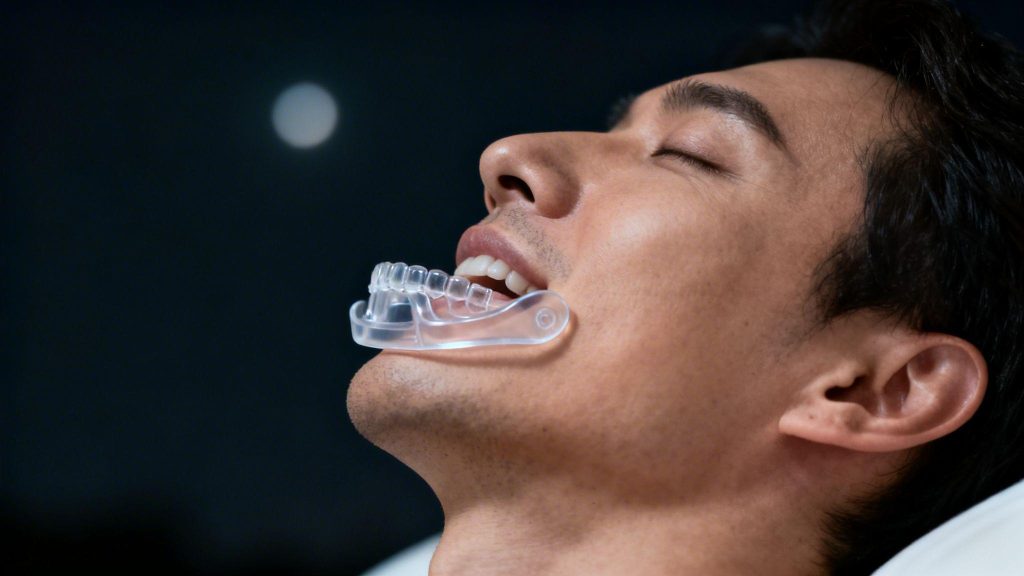
A dental sleep appliance, called a mandibular advancement device, fits over your upper and lower teeth like a sports mouthguard. It gently holds your lower jaw forward. That small shift opens the space behind your tongue. Your airway stays clear, and air keeps moving while you sleep.
The key word is custom. A dentist takes an exact mold of your teeth so the device fits only you. The American Academy of Sleep Medicine and the American Academy of Dental Sleep Medicine both suggest a custom, adjustable appliance over a store-bought one.
Adjustable matters too. Your dentist can fine-tune how far your jaw sits forward across several visits. That way you get the airway benefit without waking up with a sore jaw.
Comfort is a big reason people stay with an appliance. It makes no sound, needs no power, and fits in a small case. Many patients who quit CPAP find they can wear a fitted device every night, which is what makes any treatment work.
The Oral Appliance Process, Step by Step
Getting a sleep appliance takes a few visits, not one. First, a sleep physician confirms your diagnosis with a sleep study. Next, your dentist takes impressions of your teeth. A lab builds your custom device. You come back for a fitting, then for small adjustments until your sleep and breathing improve.
The sleep study comes first for a reason. A dentist cannot diagnose sleep apnea, and no appliance should go in until a physician confirms what you have. That study may happen at a lab or at home with a take-home monitor.
The dental part is simple. Your dentist takes molds of your upper and lower teeth, which feels like getting fitted for a retainer. The lab uses those molds to build a device that matches your bite.
After the fitting, expect a few weeks of small tweaks. The American Academy of Sleep Medicine and the American Academy of Dental Sleep Medicine advise regular follow-up with both your dentist and your sleep physician. Many physicians order a second sleep test to confirm the device is doing its job.
Who Is a Good Fit for a Dental Sleep Appliance?
Oral appliance therapy works best for adults with mild to moderate obstructive sleep apnea. It also helps people with severe apnea who cannot tolerate a CPAP machine. Good candidates have healthy teeth and gums strong enough to hold the device. A sleep physician and dentist decide together whether it suits your case.
It is not right for everyone. People with loose teeth, active gum disease, or certain jaw problems may need another route. Central sleep apnea, which starts in the brain rather than the airway, does not respond to these devices.
Side effects tend to be mild. Some people notice extra saliva, jaw tightness, or tooth soreness in the first few weeks, and these often ease with small adjustments. A few notice slight bite changes over months.
That is why follow-up matters. The American Academy of Dental Sleep Medicine advises that your dentist keep an eye on your teeth and bite over time. If you only snore and have no apnea, an appliance can still quiet the noise, and your dentist will tell you honestly where you stand.
What Does a Sleep Apnea Appliance Cost?
A custom sleep apnea appliance usually costs between $500 and $2,500 in the United States, according to Medical News Today. The price depends on the device type and how many follow-up visits you need. Many medical and dental plans cover part of the cost when a sleep physician documents the diagnosis.
Store-bought guards cost less, often under $100. They rarely treat true apnea, and a poor fit can hurt your teeth or jaw over time. That low price can give a false sense of safety while the apnea keeps going.
Medical insurance often treats a prescribed oral appliance as medical equipment, not a dental service, so coverage can differ from your regular dental benefits. A documented sleep study usually helps your claim.
Before you start, ask your plan what it covers. The team at Echo Ridge Dental can walk you through payment options and help you understand your benefits before you commit to a device.
Common Questions About Dental Sleep Appliances
Do I Need a Sleep Study Before a Dental Appliance?
Yes. A sleep physician must confirm obstructive sleep apnea before you get an appliance. That usually means a sleep study, done at a lab or at home with a take-home monitor. A dentist cannot diagnose apnea. The study also documents your diagnosis, which most insurance plans need before they help pay.
Is an Oral Appliance as Good as CPAP?
CPAP controls more airway events, so physicians often try it first for severe cases. Still, the American Academy of Sleep Medicine recommends oral appliances for people who cannot tolerate CPAP. A device you wear every night beats a machine you leave in the closet, so fit and comfort carry real weight here.
Will Insurance Cover a Sleep Apnea Appliance?
Often yes, at least in part. Many medical plans treat a prescribed appliance as medical equipment once a sleep study documents your diagnosis. Dental plans vary more widely. Your coverage depends on your plan and your apnea severity, so ask before you start. The Echo Ridge Dental team can help you check your benefits.
Getting Checked for Sleep Apnea in Wenatchee
If you snore, wake up tired, or dread your CPAP machine, a dental sleep appliance may be worth a look. At Echo Ridge Dental, Dr. Michael Potter, DDS, fits custom oral appliances for patients across the Wenatchee Valley, including Chelan, Leavenworth, and East Wenatchee. Spanish-speaking staff can help you at every step.
Echo Ridge Dental won the 2023 Wenatchee World’s Best Dental Office award, and the team focuses on comfort for anxious and tired patients alike.
You do not have to keep dragging through foggy mornings. Call Echo Ridge Dental at (509) 662-9685 to ask about a sleep appliance evaluation and your next steps.